 Image 1 of 1
What the Diagnostic Explores
The assessment surfaces patterns across five key areas:
Awareness
How clearly the team recognizes challenges, dynamics, and opportunities.
Voice
The extent to which people feel able to speak honestly, raise concerns, and contribute ideas.
Depth
How fully conversations engage what truly matters.
Responsiveness
How the team addresses challenges, tension, and change.
Readiness
The team's current posture toward growth, reflection, and meaningful engagement.
What Leaders Receive
Team-level summary of findings
Key patterns worth attention
Lead HUMAN Quadrant placement
Readiness snapshot and interpretation
Guidance for meaningful next steps
Recommendations for additional support, if appropriate
Four Common Team Patterns
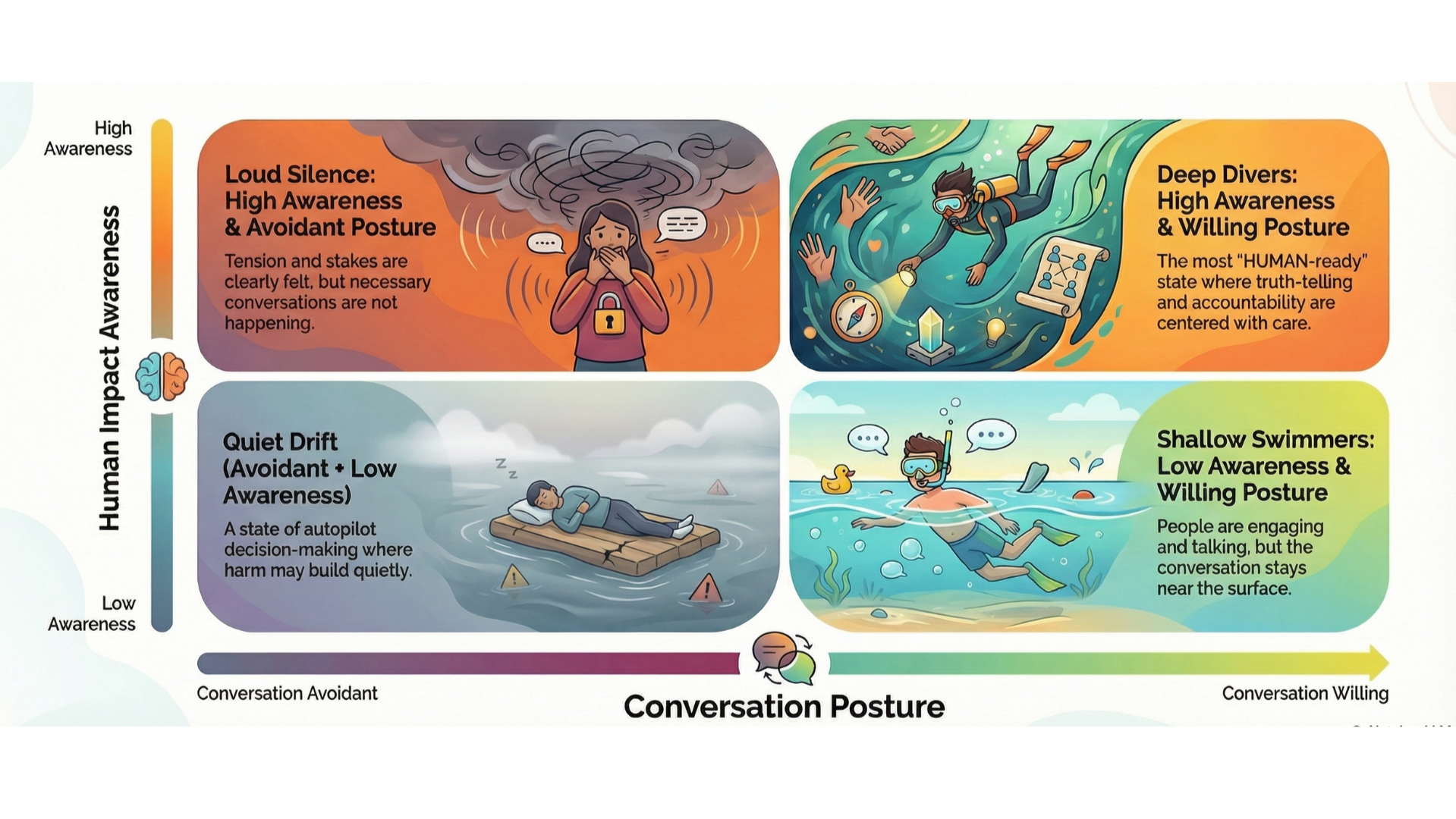
Every team is different, but many teams find themselves operating in one of four common patterns:
Quiet Drift
Things continue moving, often on habit. Patterns may go unnoticed while impact builds quietly.
Loud Silence
The tension is felt and understood, but the conversation is not happening where it needs to.
Shallow Swimmers
People are engaging, but conversations are not yet reaching the depth the moment requires.
Deep Divers
The team shows willingness and awareness to engage honestly, navigate complexity, and grow with intention.
Who It's For
Leadership teams
Departments
Boards
Committees
Mission-driven organizations
Teams navigating growth, change, conflict, or uncertainty
Why It Matters
Team culture is shaped by everyday dynamics: trust, ownership, communication, tension, and responsiveness.
When those patterns remain unnamed, they quietly influence morale, decisions, and results.
The Lead HUMAN Team Diagnostic helps leaders see what is present so they can choose thoughtful next steps.
Because human dilemmas deserve and demand HUMAN decisions.
Not sure whether the diagnostic is the right fit for your organization?
Schedule a conversation to explore your goals and determine whether the Lead HUMAN Team Diagnostic is the best next step.